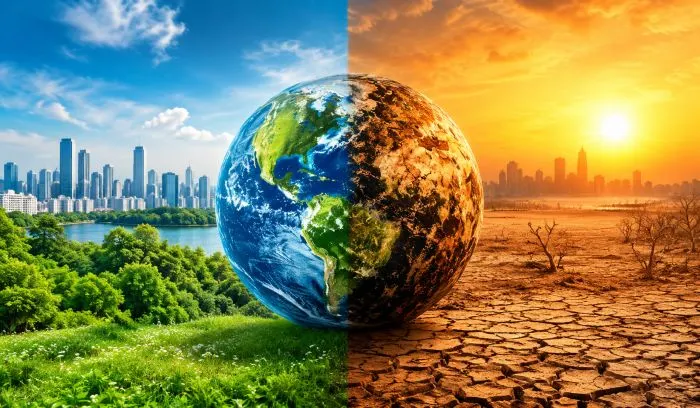

The world is full of scientific facts about our beautiful planet Earth and what we do and do not understand about it even if we do not appreciate what is happening around us. We apply science to our incredible experiences every day by making sense of the myriads of data our feet process every second.
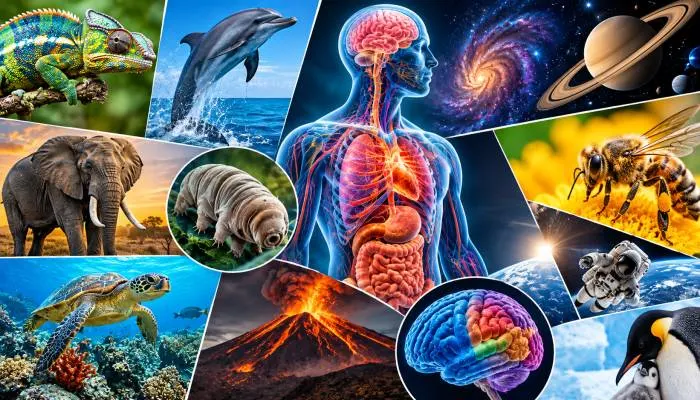
Many mind-blowing facts about nature exist, like sharing more DNA with a banana than you think. We've put together a list of amazing facts about the body, the animals that live on Earth alongside us, and even about space.
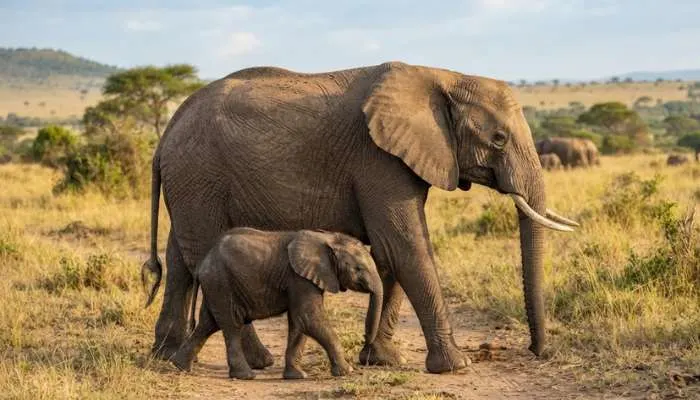
The elephant has the longest gestation period of all mammals
No other land animal has a longer pregnancy, which can last up to 22 months (nearly 2 years). To survive, a tiny, underdeveloped elephant calf needs to develop a brain with a lot of processing power and a big body capable of walking around immediately after birth.
Read More: Amazing Wild Places Around the World Steeped in Legend
Nearly 1000 animal species have gone extinct since the 1500s
At the hands of humans, almost 1000 species now find themselves on the brink of extinction. And even more frighteningly, researchers believe millions of species have probably already been lost before ever being discovered. This alarming situation is leading to a significant global biodiversity crisis.
It would take 1.1 million mosquitoes to drain all your blood
With the average blood volume of an adult human body being 5 litres (or about 1.32 gallons), about 1.1 million mosquitoes would need to bite a human being simultaneously to cause that human to run out of blood completely (1 mosquito is guaranteed to use up at least 5 microlitres of blood –0.000005 litres while sucking blood).
So, while a mosquito bite may just be a minor inconvenience, that is, in fact, the total blood content of the average adult human's body.
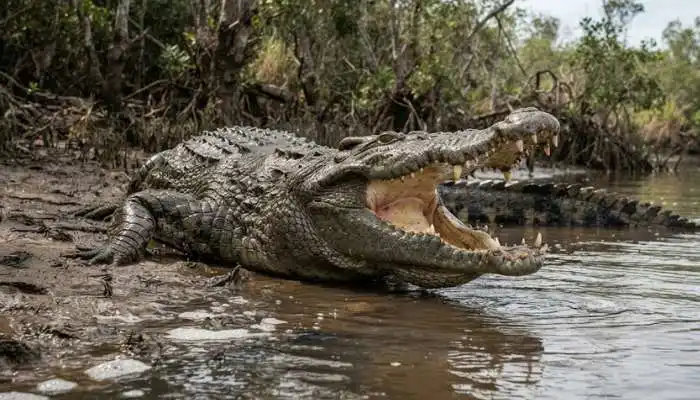
Crocodiles have the most powerful bite in the world
A Saltwater Crocodile Bite Force: 3700 psi (pounds per square inch) This is the most powerful bite-force ever recorded for a living animal. The strongest bite force of any living creature on earth is recorded as almost 4 times as forceful as a lion. The saltwater crocodile's jaws are engineered to trap and hold in huge prey - far more than any other predator.
Astronauts grow up to three per cent taller in outer space
As much as 3% in height When astronauts travel to space, they gain height. The pull of gravity on the Earth balances the compression of spines.
When someone reaches a position in which they are weightless, which happens because the force of gravity no longer affects the astronauts, the cartilages in all of their spinal vertebrae can expand and fill up, giving the astronaut an increase in total height. Once back on Earth, gravity returns astronauts to their original height once more.
Men’s brains may be bigger, but women’s brains are more efficient
But even with larger average brain sizes of males than females, researchers have found a pattern of more efficient brains in females.
Mapping brain activities has even indicated that female brains tend to have stronger connectivity between the two halves of their brains. So, the female brain's more networked nature allows for quicker communication among different parts of the brain, giving better outcomes with memory, intuition and social information processing.
The average human eats 7,000 animals in their lifetime
If we go by the statistics of the eating of animals (by the way of diet and also the average life of different animals), someone who eats animals (Meat) will end up eating 7000 animals throughout their life. 11 will be cows, 27 will be pigs, 2400 will be chickens, 80 will be turkeys and many thousands of fish.
These statistics show how much livestock needs to be produced for a protein led diet and also show the size of the current food industry.
Your brain registers 11 million bits of information every second
Your senses (eyes, ears, skin, nose) are on overdrive … All this data arriving at your senses could overload your brain if not filtered. Your brain receives 11 million bits of data per second and your consciousness processes 40 to 50 bits of that! This differential allows your subconscious mind to kick in, filtering the necessary from the irrelevant so you can survive.
You May Also Read: Uncovering the Mysteries of the Asian Forest Scorpion
Honey has an indefinite shelf life
Honey is one of the few foods that can last for thousands of years. Archaeologists have discovered contents of honey in tombs that are over 3000 years old (Egypt) and they were still edible!
Its longevity is due to its acidity, its low moisture content, its high sugar content, and hydrogen peroxide that bees produce that prevents bacteria from growing.
FAQs
1. What are some interesting scientific facts?
Some interesting facts include elephants having a pregnancy of up to 22 months, astronauts becoming temporarily taller in space and honey lasting for thousands of years under suitable conditions.
2. How long is an elephant pregnant?
An elephant can have a gestation period of about 22 months, making it the longest pregnancy among living land mammals.
3. Why do astronauts become taller in space?
Without the normal compression caused by Earth's gravity, the spine can expand slightly, causing astronauts to become temporarily taller.
4. How long can honey last?
Properly stored honey can remain edible for a very long time because of its low moisture, high sugar content and acidic nature.
5. How much information does the human brain receive?
The sensory system takes in a huge amount of information every second, while conscious attention processes only a small portion of it.